
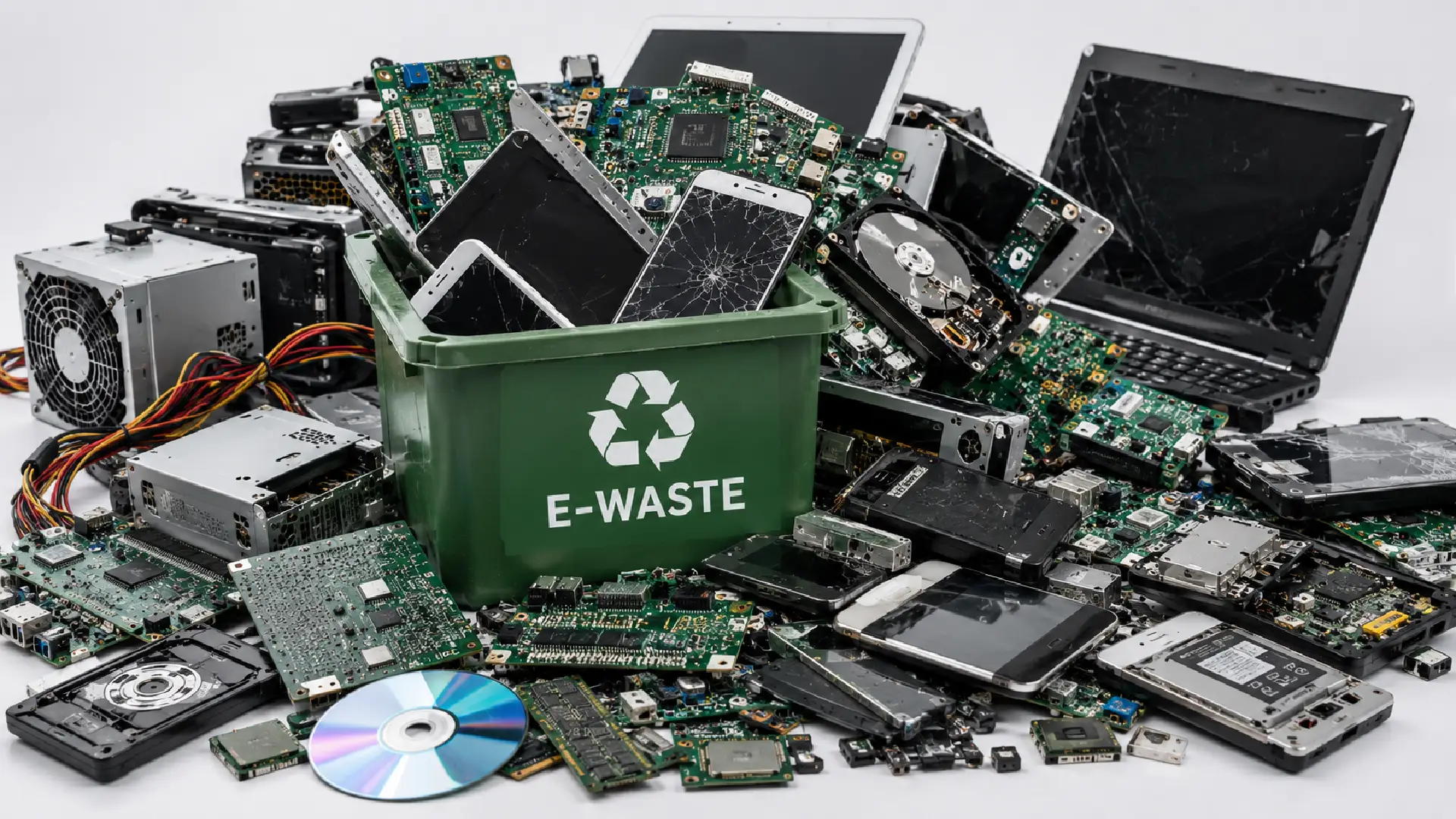
India’s e-waste industry is growing rapidly as more electronic products reach the end of their life. Along with this growth, regulatory compliance has become more important than ever. Whether you are planning a new e-waste recycling plant or expanding an existing facility, understanding India’s E-Waste (Management) Rules is essential for smooth and legal operations.
This guide explains the key compliance requirements every recycler should know in 2026.
Why E-Waste Compliance Matters
The E-Waste (Management) Rules aim to ensure that electronic waste is collected, dismantled, and recycled safely without harming people or the environment. The rules also support a circular economy by recovering valuable materials such as copper, aluminium, steel, plastics, and precious metals from discarded electronic equipment. The framework is administered by the Ministry of Environment, Forest and Climate Change (MoEFCC) and implemented through the Central Pollution Control Board (CPCB).E-Waste Compliance Checklist for Recyclers
- Register with CPCB
- Install an Environmentally Safe Recycling Facility
- Track the EPR Recycling Targets
- FY 2023-24 and 2024-25: 60%
- FY 2025-26 and 2026-27: 70%
- FY 2027-28 onwards: 80%
- Accept E-Waste Only Through Approved Channels
- Maintain Complete Records
- Quantity of e-waste received
- Source of collection
- Quantity processed
- Materials recovered
- Disposal of non-recyclable waste
- Sales of recovered materials
- Submit Returns on Time
- Generate EPR Certificates Correctly
- Prioritise Worker Safety
- Watch for Regulatory Changes
Why Your Overall E-waste Plant Design Decides Your Compliance Ceiling
Compliance is not only about documentation. It also depends on how efficiently your recycling plant operates. A well-designed e-waste recycling plant improves:- Material recovery rates
- Operational safety
- Equipment reliability
- Regulatory compliance
- Overall profitability