
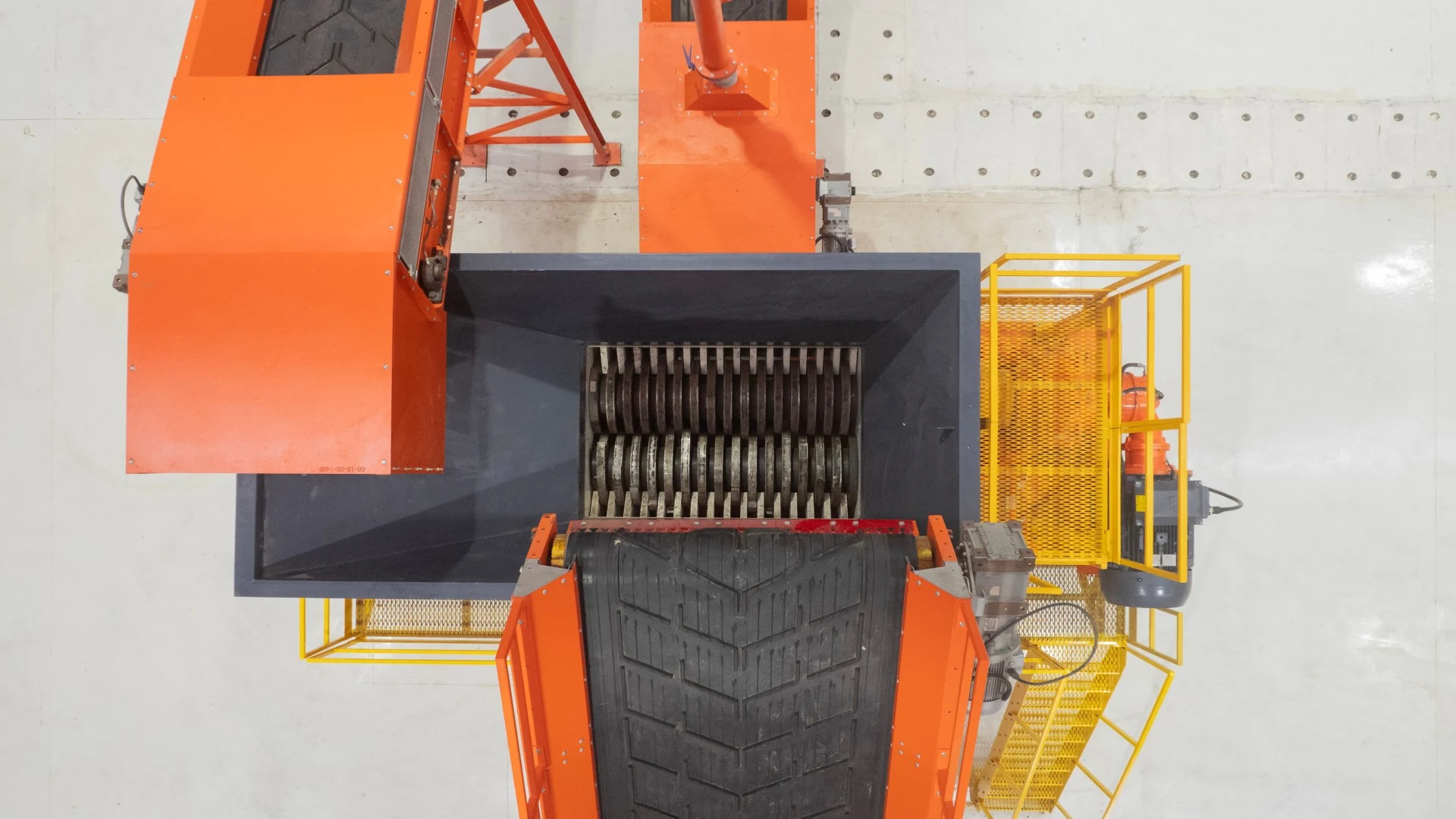
Tyre recycling starts with one important step: reducing waste tyres into a manageable and usable size. For modern tyre recycling plants, twin-shaft shredder plays a crucial role in this process by converting whole or pre-processed tyres into consistent tyre shreds that can be used for fuel, further recycling and other applications.
When tyre shreds ranging from 50 mm to 500 mm are available as the input material, the right shredding technology becomes even more important. The size, composition and end use of the tyre shred determine which downstream process is most suitable.
What is Twin-Shaft Shredder?
A twin-shaft shredder uses two counter-rotating shafts fitted with cutting knives to shred tyre material. Unlike high-speed cutting systems, twin-shaft shredders work at low speed and high torque, making them suitable for tough materials containing rubber and steel.
This design allows the machine to handle tyre shreds of different sizes while maintaining a steady material flow. For larger tyre shreds, the high torque helps the shredder process thick rubber sections and steel-reinforced material without putting unnecessary stress on the system.
In tyre recycling plants, twin-shaft shredders are commonly used as primary shredders to prepare material for the next stage of processing.
Why Are Twin-Shaft Shredder in Important in Tyre Recycling?
The main purpose of a twin-shaft shredder is not simply to make tyres smaller. It is to prepare the material for its intended end use.
Depending on the screen and cutting configuration, tyre shreds can be reduced to a controlled size of 50-150 mm and then sent to secondary shredding, granulation or directly to certain end-use applications. This makes the twin-shaft shredder an important part of an efficient tyre recycling plant.
Where Are 50–500 mm Tyre Shreds Used?
Depending on their size, cleanliness and steel content, tyre shreds can be used in several applications, such as:
- Tyre-Derived Fuel (TDF): Tyre shreds can be further processed into fuel-sized chips for use as Tyre-Derived Fuel. Smaller tyre chips are also commonly used as an alternative fuel in cement kilns, paper and pulp boilers, power plants and other industrial heating systems.
- Secondary Shredding: Larger tyre shreds can be used as feedstock for secondary shredders. The material is reduced further into smaller rubber chips or mulch, with steel separation taking place during the process.
- Rubber Mulch, Rubber Chips and Crumb Rubber Granules: After secondary processing and steel separation, tyre shreds can become rubber mulch or chips of size 20-30 mm. These materials can be used for continuous pyrolysis plant, landscaping, playground surfaces, civil engineering applications and as feedstock for further recycling.
- Pyrolysis Feedstock: Tyre shreds can also be prepared as feedstock for tyre pyrolysis plants, where waste tyres are thermally processed to recover products such as pyrolysis oil, recovered carbon black and steel. Proper size reduction helps create a more manageable and consistent feed material.
5 Things to Keep in Mind While Choosing the Right Twin-Shaft Shredder for Tyre Recycling Plant
Choosing a twin-shaft shredder should not be based only on its motor power or rated capacity. The machine needs to match the actual tyre feedstock and the final application; here are the some of the following considerations:
- Input Size and Type of Tyres: The first consideration is the size and type of material entering the shredder. A machine handling whole passenger car tyres will have different requirements compared with one processing 50–500 mm tyre shreds. Truck, bus and OTR tyres can also contain significantly more rubber and steel, requiring higher torque and a robust cutting system.
Before selecting a shredder, consider: Maximum input size, Tyre type and dimensions, Rubber thickness, Steel content, Quantity of textile and most importantly Expected tonnes per hour.
- Required Output Size: The required output size is another important factor. If the shredded tyres are being sent to a secondary shredder, the primary shredder may produce a larger output. If the material is intended for a specific fuel application or another downstream process, a smaller and more controlled output may be required. The cutting chamber, knife configuration and screen arrangement should therefore be selected according to the required output size.
- Torque and Cutting Performance: Tyres are difficult materials to process because they combine flexible rubber with embedded steel reinforcement. This is where high torque becomes important. A low-speed, high-torque twin-shaft shredder can gradually pull and shred the material while handling resistance from steel and thick rubber sections. A suitable drive system also helps the machine deal with variations in feedstock without frequent interruptions.
- Durability and Maintenance: Tyre recycling is a continuous-duty application. The shredder is exposed to abrasive rubber, steel wires and heavy loads, so machine construction and component quality directly affect plant reliability. Therefore, a shredder designed for easy maintenance can reduce downtime and help maintain consistent plant performance over the long term.
Important factors include: Robust cutting knives, Heavy-duty shafts, Strong bearings and transmission components, Easy access for maintenance, Replaceable wear parts and Effective protection against overloads.
- Integration With the Complete Recycling Line: A twin-shaft shredder should not be selected as a standalone machine. It should be evaluated as part of the complete tyre recycling plant.
The shredding stage needs to work efficiently with conveyors, magnetic separation, secondary shredders, granulators and other downstream equipment.
For example, a typical tyre recycling process can include: Waste Tyres → Primary Shredding → Secondary Shredding → Steel Separation → Granulation → Fibre Separation → Rubber Granules
The exact configuration depends on the final product and required output quality.