
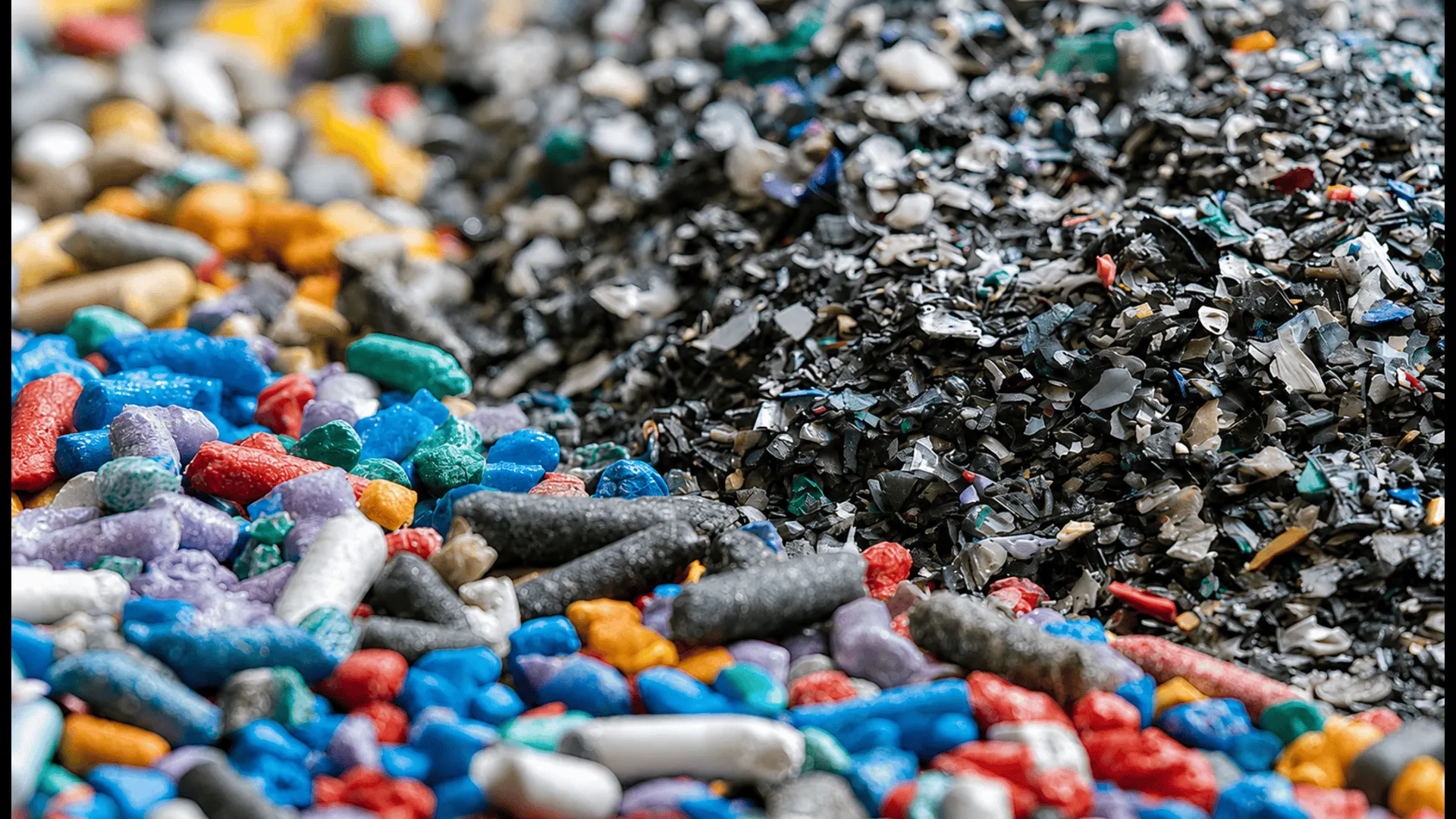
India generates over 62 million tonnes of municipal solid waste annually, and a large portion of it still ends up in landfills. Refuse Derived Fuel (RDF) plants offer a practical middle path by converting non-recyclable dry waste into a fuel source that cement kilns and thermal plants can actually use. But before any plant goes operational, the first real question is always about cost and whether the numbers make sense long-term.
Here’s an honest breakdown of what goes into setting up an RDF plant in India.
What is the Actual Function of an RDF Plant?
An RDF plant doesn’t just collect waste and compress it. It processes heterogeneous municipal solid waste like plastics, paper, textiles, rubber through a series of size reduction and separation stages to produce a consistent, high-calorific fuel.
The output, often called Refuse Derived Fuel (RDF) plants when it meets specific quality standards, needs to have a uniform particle size, controlled moisture content, and a predictable calorific value. Achieving that consistently is where the engineering challenge and the cost lie.
Which Core Equipment is Required for an RDF Plant?
Primary Shredding Stage
The primary shredding stage performs the initial size reduction of incoming waste. Depending on the plant configuration, the feedstock may contain bulky, irregular, mixed, and relatively wet waste along with various contaminants. The primary shredder reduces this material to a more manageable and relatively uniform size for subsequent screening, separation, and processing.
For heterogeneous municipal and commercial waste streams, dual-shaft primary shredders are commonly used because their high-torque, low-speed operation is well suited to bulky and difficult-to-process materials. However, shredder configuration should be selected based on the waste composition, moisture content, bulk density, contamination level, required throughput, and target particle size, rather than capacity alone.
Secondary Shredding / Refining
After primary reduction, material moves to a secondary shredder for fine shredding. This stage is where output quality is determined because particle size at this point directly affects the calorific value and whether the end product meets cement kiln or WtE plant specifications.
This secondary solid waste shredder machine typically operates at lower throughput but demands higher precision and consistency.
Screening and Separation Systems
Trommel screens separate organics and fines early in the process. Wind sifters remove light and heavy fractions. Magnetic separators pull out ferrous metals before and after shredding specifically both to recover value and to protect the shredder rotors.
These systems collectively determine how clean your RDF output is and how much residual waste you’re left managing.
Conveyors and Material Handling
Often underestimated in planning, conveyors form the backbone of plant flow. Poorly designed material handling creates bottlenecks that limit effective throughput regardless of how capable the shredders are.
What are the Typical Capacity Options for RDF Plants in India?
RDF plants in India are generally planned around the following daily processing capacities:
Small-scale (50–100 TPD): Suitable for smaller urban local bodies or industrial waste generators. These plants are simpler in configuration but may struggle to attract large offtake agreements due to inconsistent volume.
Mid-scale (150–300 TPD): The most common range for municipal contracts. Enough output to supply cement kilns reliably while remaining manageable in terms of operations and land requirement.
Large-scale (500 TPD and above): Typically integrated into larger waste management concessions or run by established waste processing companies. Requires serious infrastructure investment and dependable waste supply agreements.
NOTE: Capacity selection should always be driven by guaranteed waste input availability not by projected figures.
What is the Expected ROI Timeline for an RDF Project?
The financial return on an RDF plant depends on two revenue streams working together: tipping fees from waste generators and offtake revenue from fuel buyers.
Cement plants in India are among the largest consumers of RDF and SRF, driven by their thermal substitution rate targets. The rate they pay varies significantly based on the calorific value of the fuel, which circles back to how well the MSW shredder machine line is performing.
Most mid-scale RDF projects in India target a payback period in the range of 3 to 6 years, with profitability influenced by:
- Stability of waste supply (municipal contracts vs. spot sourcing)
- Quality consistency of RDF output
- Proximity to offtake buyers (transport cost is significant)
- Equipment uptime and maintenance costs
Plants with reliable shredding lines and consistent output quality tend to negotiate better long-term offtake rates, which compounds over time into meaningfully better returns.
What Costs are Often Underestimated in Project Planning?
Beyond equipment, a few cost heads regularly catch first-time plant developers off guard:
- Civil and infrastructure works: Shed construction, fire suppression, leachate management, and access roads can be substantial depending on the site.
- Pre-processing and manual sorting: Some level of manual segregation before mechanical processing is unavoidable with Indian MSW, and the labour and space cost for that needs to be factored in.
- Regulatory approvals: Obtaining consent to operate from the relevant State Pollution Control Board takes time and sometimes requires additional pollution control investments.
- Commissioning and ramp-up period: Plants rarely hit target throughput from day one. Planning for a 3 to 6-month ramp-up phase financially is important.
What is the Bottom Line for Investors?
An RDF plant is not a passive investment. The returns depend on how consistently the plant can produce quality fuel from inconsistent raw material, and that burden falls almost entirely on the shredding and separation equipment at its core.
Getting the equipment selection right, matched to actual waste composition and not theoretical specs, is the single most important decision in the entire project lifecycle.