
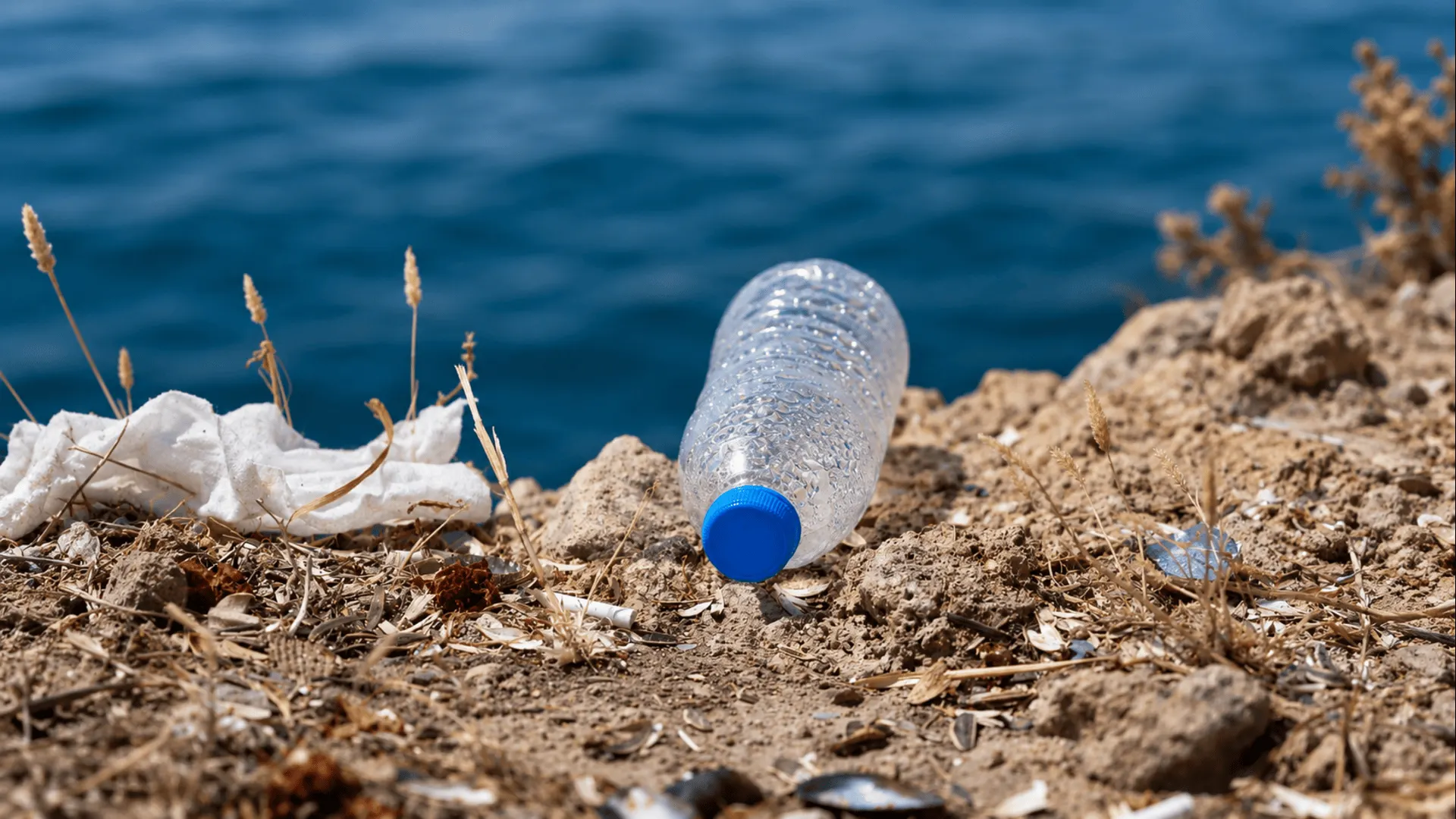
India has over 3,000 legacy waste dumpsites, according to data from the Central Pollution Control Board (CPCB). These sites together cover roughly 10,000 hectares of land and hold an estimated 1,300 million tonnes of mixed, unprocessed garbage that has been accumulating for decades. In city after city, old dump yards sit in the middle of growing urban areas, leaching pollutants into groundwater, releasing methane and other gases into the air, and blocking land that cities desperately need.
The term ‘legacy waste’ refers specifically to old, mixed municipal solid waste (MSW) that was dumped without scientific treatment or source segregation. Unlike fresh MSW, legacy waste is a compressed, aged, and highly heterogeneous mix of organic matter, plastic, metal, textile, construction debris, and fine soil-like particles. Processing it requires a different approach from processing fresh waste.
The Central Pollution Control Board (CPCB) defines bio-mining as the scientific process of excavating, treating, segregating, and profitably utilising aged MSW lying in dumpsites. Bio-mining is the process used to tackle this legacy waste problem at scale.
Why bio-mining is now a legal mandate in India
The Solid Waste Management Rules, 2016 required all Urban Local Bodies (ULBs) to investigate existing dumpsites and take action for bio-mining or bio-remediation wherever needed. However, enforcement was slow in the initial years.
The real push came with Swachh Bharat Mission Urban 2.0 (SBM-U 2.0), launched in 2021 with a total budget outlay of Rs 1,41,600 crore. One of the central goals of SBM-U 2.0 is the remediation of all legacy dumpsites across India, with the aim of freeing up approximately 15,000 hectares of locked urban land. The mission set clear deadlines: cities with a population below one million were required to clear legacy waste sites by March 31, 2023, and cities with a population above one million by March 31, 2024.
The National Green Tribunal (NGT) has added legal weight to these mandates. The NGT is a specialised court that deals exclusively with environmental matters. It has issued binding orders directing municipal corporations to scientifically process their legacy dumpsites within set timelines. Non-compliance can result in fines and contempt proceedings.
As of September 2024, data from the SBM Urban dashboard showed that out of 2,424 identified legacy dumpsites, only 471 had been completely remediated. Around 1,226 sites had ongoing remediation work, while 727 sites remained untouched. This means a very large share of the work is still pending, and the pipeline of projects is therefore significant.
Key policy facts at a glance 3,159 dumpsites identified by CPCB covering approx. 10,000 hectares SBM-U 2.0 budget: Rs 1,41,600 crore (2021-2026) Goal: remediate all legacy dumpsites and reclaim ~15,000 hectares of land As of Sept 2024: only 19.4% of identified sites completely remediated NGT orders make compliance legally binding for municipal corporations |
What is bio-mining process: step by step
Bio-mining is not a single machine or a single technology process. It is a sequence of steps, each relying on specific equipment, that converts a messy pile of old waste into separated, usable material streams and eventually clean land. Here is how the process works from start to finish.
Step 1: Site assessment and planning
Before any excavation begins, the dumpsite is assessed. Engineers conduct waste characterisation studies to understand the composition, moisture content, and depth profile of the waste. This data shapes the choice of equipment, plant capacity, and processing sequence. A detailed project report (DPR) is prepared and submitted to the relevant ULB or state authority before work commences.
Step 2: Excavation
Excavators, bulldozers, and front-end loaders dig up the old waste. The excavated material is loaded onto conveyor systems or dumpers and transported to the processing area on site. At this stage, the material is a dense, heavily compacted mixture of everything from old plastic bags and metal cans to soil-like decomposed organic matter. It is abrasive, heavy, and often wet.
Step 3: Trommel screening
The excavated material first passes through a trommel screen: a large rotating drum with perforations of defined sizes, typically around 15 to 25 mm. As the drum rotates, fine particles including decomposed organic matter and soil fall through the perforations. This fine fraction is called the ‘inert fraction’ or ‘landfill mined soil-like fraction’ (LFMSF). It is generally clean enough to be reused as daily cover soil at engineered landfills or as construction fill.
The larger material that does not pass through the trommel moves on to the next stage for further processing. This is where shredding becomes critical.
Step 4: Shredding: The most important step in the process
The coarse fraction coming out of the trommel is a mix of bulky, irregular objects: plastic film, rigid plastic containers, textile pieces, wood fragments, rubber, paper, and composite items. These pieces vary widely in size and shape. In this state, they cannot be efficiently sorted by downstream equipment. Magnetic separators cannot pull out metals buried inside large lumps. Air classifiers cannot separate light from heavy fractions if the material is still in large, entangled pieces. And RDF made from unsized, irregular material will not meet the calorific value and particle size standards required by cement kilns.
Shredding solves all of this. A shredder tears, cuts, and reduces the incoming material into smaller, more uniform pieces. This size reduction does several things at once. It liberates materials that are mixed or compacted together. It creates a more uniform particle size that downstream equipment can handle consistently. It breaks open composite items and exposes the individual materials inside. And it increases the bulk density of the material, which helps with transport and handling.
In bio-mining plants, shredding is typically done in two stages:
- Primary shredding: A heavy-duty primary or pre-shredder handles the first stage. This machine deals with bulky, highly mixed, and abrasive legacy waste at high throughput. The primary shredder does not need to produce a precise output size. Its job is to bring large, irregular pieces down to a manageable size, typically in the range of 50 to 150 mm, and to stabilise the material flow for downstream processing.
- Secondary shredding: The material then goes through a secondary or fine shredder. This machine works at higher precision, reducing the material to a target output size, typically between 30 and 80 mm depending on the end use. For RDF production destined for cement kilns, a target of 50 mm is common. The secondary shredder produces the consistent, uniform particle size that makes sorting effective and RDF quality high.
For legacy waste specifically, the shredder faces conditions that are more demanding than a standard MSW plant. The material is aged and compacted. It can contain hard, abrasive items like stones, broken glass, and metal pieces. Moisture content varies widely. Therefore, need for high-capacity and robust shredding technology becomes a necessity to handle all of this without frequent jams or breakdowns, because in a bio-mining project, downtime has direct cost implications.
Step 5: Sorting and separation
Once the material has been shredded to a consistent size, it moves through a series of sorting stages. A magnetic separator removes ferrous metals such as steel and iron. An air classifier or air density separator uses a controlled airflow to separate light materials (plastic film, paper, textiles) from heavier ones (inert material, fine sand, stone). In some plants, a ballistic separator is also used, which sorts material by both density and shape.
The sorted streams are then stockpiled separately for different end uses. Some plants also include a manual picking line at the end for quality checking and recovery of specific materials.
Step 6: End-product processing and dispatch
The sorted fractions are processed into their final form. Combustible material (plastic, textile, rubber, paper) is compacted, baled, or directly dispatched as RDF to cement plants or waste-to-energy facilities. Metals go to scrap recyclers. Inert material is used as construction fill or as daily cover at engineered landfills. In some projects, composting of the organic fraction is also practised on site.
Step 7: Land reclamation and handover
Once all the waste has been excavated and processed, the cleared land is graded, compacted, and remediated of any residual contamination. The cleaned land is formally handed over to the relevant municipal authority for redevelopment.
What bio-mining produces: the output streams
A well-run bio-mining plant produces several output streams. The relative proportions of each will vary based on the age and composition of the waste at each specific site.
- Refuse Derived Fuel (RDF): This is the combustible fraction, made up of plastics, textiles, rubber, leather, and paper. RDF is co-processed in cement kilns as a substitute for coal and other fossil fuels. India’s cement industry has been steadily increasing the use of alternative fuels under the guidance of the MoEFCC, CPCB, and Bureau of Energy Efficiency. RDF generated from bio-mining projects is supplied to cement plants to improve Thermal Substitution Rates (TSR), reduce dependence on conventional fossil fuels, and support decarbonisation and sustainability objectives.
- Inert soil fraction (LFMSF): The fine fraction from trommel screening. This soil-like material has been studied for reuse in construction fill, road sub-base, and daily cover at engineered landfills.
- Metals: Ferrous scrap recovered by magnetic separation is sold to scrap recyclers. Non-ferrous metals can be recovered through additional separation steps and have been utilized for recycling applications, enabling the recovery of valuable resources such as aluminium, copper, and brass while reducing the demand for virgin raw materials.
- Plastic: Hard plastic recovered through sorting can be sent for recycling. Flexible plastic film typically goes into the RDF stream.
- Construction and demolition (C&D) debris: Some legacy waste contains significant quantities of broken bricks, concrete fragments, and tiles, especially in older dumpsites. This can be crushed and used as road base or backfill.
- Reclaimed land: The most valuable output. In land-scarce Indian cities, a cleared dumpsite can be worth hundreds of crores. SBM-U 2.0 estimates that the cumulative goal is: free up 15,000 hectares of urban land through bio-mining projects.
With thousands of dumpsites still awaiting remediation, reliable shredding technology remains central to efficient bio-mining operations. Fornnax offers heavy-duty shredding solutions designed to process challenging legacy waste streams, enabling effective results for faster ROI and improved resource recovery.