
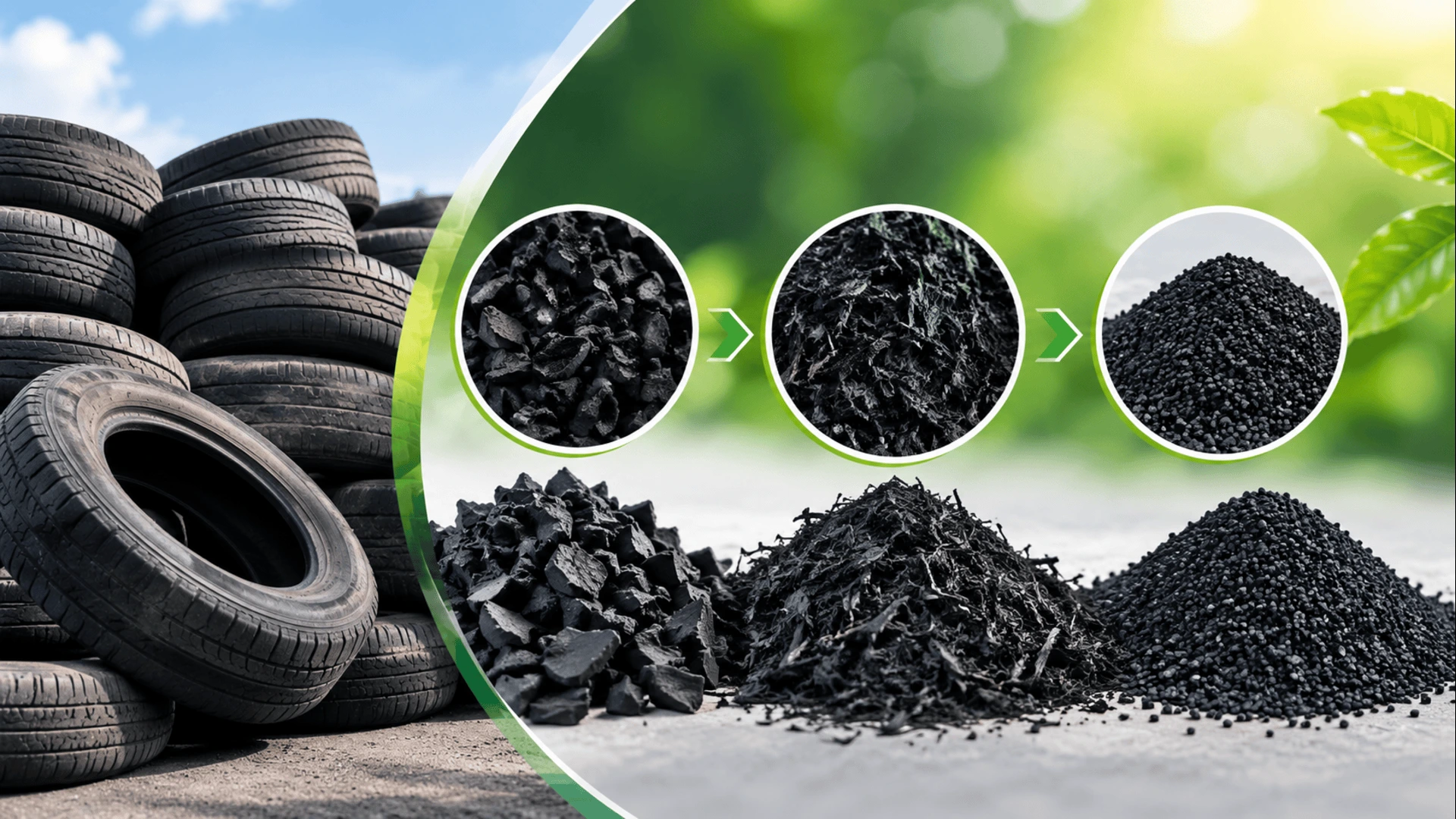
Scrap tyre management has changed from a major environmental disposal challenge into a growing and advanced recycling industry. Discarded tyres contain valuable resources, including quality rubber and high-grade steel. Few of the most commercially useful products made through tyre recycling are steel-free tyre chips/ rubber mulch and granules. Today, tyre recycling business is a growing industry and a vital pillar of the circular economy.
Understanding the Input Material and Primary Shredding Phase
The first step in producing high-quality steel-free rubber mulch is handling the scrap tyres correctly. Tyre recycling plant generally processes different types of scrap tyres, including passenger car tyres, truck tyres, and large off-the-road (OTR) and mining tyres.
During this stage, primary tyre shredder machine breaks whole tyres into coarse tyre shreds, usually ranging from 50 to 300 millimeters. These coarse shreds can be used as alternate fuel in cement plants or can be further processed through secondary shredding.
Operators must ensure that the primary shredder output moves smoothly into the secondary processing line to maintain a continuous and efficient production process.
The Core Transformation Phase: Secondary Shredding
Moving from coarse tyre shreds to refined steel-free chips requires advanced secondary shredders. This is one of the most important stages in determining the final quality, consistency, and purity of the rubber mulch.
Secondary tyre shredder machine use specially designed cutting geometries to separate the steel wire embedded inside the rubber while reducing the material size to approximately 20 to 30 millimeters. The cutting blades are engineered to create clean cuts instead of tearing the rubber. This helps prevent uneven edges and maintains the quality of the rubber. By maintaining precise cutting accuracy during secondary shredding, plant operators can achieve a consistent size range that meets the requirements of various industrial applications.
Achieving Purity: Magnetic Separation Technology
One of the key features of high-quality rubber mulch is that it is free from ferrous metals. Even small amounts of leftover steel wire can damage downstream equipment, create safety risks in playground applications, and lower the commercial value of the final product.
To remove steel contamination, integrating high-performance overband magnets into the secondary shredding line is one of the crucial steps in the overall process. As the shredded rubber moves beneath these powerful magnetic systems, the separated steel wires are automatically attracted by the magnets and removed from the rubber stream into a separate line for collection.
This inline magnetic separation process helps the final rubber mulch achieve high purity levels. Depending on the system configuration, secondary processing lines combined with advanced cleaning systems can produce steel with purity levels of up to ninety-nine percent. This high-quality steel is largely free from materials such as textiles and rubber, making it valuable for steel manufacturing industries.
Quality Control Parameters for Rubber Mulch and Chips
Producing high-quality steel-free tyre chips requires continuous monitoring of several important quality parameters. Plant managers and operators should focus on the following key factors:
- Size Consistency: The material should maintain a uniform size range between 20 and 30 millimeters to support proper compaction and provide a consistent surface, while minimizing oversized input materials that can affect handling, processing, and end-use performance.
- Bulk Density and Flowability: Properly processed rubber mulch should have consistent bulk density, making it easier and more effective to use, as well as to handle, store, and transport.
- Textile and Fibre Minimization: Effective aspiration and separation systems should remove excess nylon fibres and textile dust produced during shredding, resulting in a cleaner and better-looking final product.
- Absence of Ferrous Contamination: Magnetic separation systems should operate efficiently to ensure that no sharp steel wires remain inside the rubber chips.
Diverse Applications of Steel-Free Tyre Chips/ Rubber Mulch
The wide range of uses for high-quality steel-free rubber mulch creates strong demand across several industries. Understanding these applications allows recyclers to adjust their production process according to specific customer requirements.
Alternative Energy and Pyrolysis Feedstock
Steel-free rubber chips can be used as a valuable alternative fuel, commonly known as high-value steel-free tyre-derived fuel. Cement kilns, paper and pulp mills, and industrial power plants use these chips because of their high calorific value. Clean rubber chips can also serve as suitable feedstock for pyrolysis plants that produce pyrolysis oil and carbon black, along with steel scrap. The recovered carbon black can be used in tyre manufacturing after certain processing steps.
Landscaping and Recreational Surfaces
Rubber granules are a durable and long-lasting alternative to wood mulch for residential gardens, livestock facilities, municipal parks, and commercial landscaping projects because they do not decompose easily, resists weather-related erosion, and helps prevent weed growth.
High-quality steel-free rubber granules also provide good shock absorption, making them suitable for children’s playgrounds and athletic/gym facilities.
Civil Engineering Applications
Civil engineers use lightweight rubber granules for several geotechnical applications, including backfilling retaining walls, bridge abutments, and road embankments. Their good drainage and thermal insulation properties can help reduce pressure on structures and address issues related to frost heave.
Best Practices for Maximizing Plant Efficiency and ROI
To remain competitive and maintain strong profitability, recycling plant operators should focus on efficient operations and regular maintenance. The following practices can help support long-term plant performance:
- Scheduled Tool Maintenance: Regularly inspect, rotate or sharpen the cutting blades and screen on primary and secondary shredders. This helps reduce energy consumption and maintain clean and consistent output.
- Optimized Material Flow: Plan the conveyor and screening layout to avoid bottlenecks and ensure smooth online movement between primary shredding, secondary shredding, and magnetic separation systems.
- Operator Training: Train plant personnel to troubleshoot equipment, monitor particle sizes, and adjust magnetic separators for effective contaminant removal.
- Environmental and Safety Compliance: Follow strict dust suppression systems and fire safety procedures throughout the facility to meet environmental requirements, minimize operational risks, and protect worker health and safety.
Final thoughts…
Producing high-quality steel-free tyre chips and rubber mulch requires the right combination of heavy-duty machinery, precise engineering, and effective separation technology. Thus, it’s important to invest in the right shredding technology that can deliver consistent output, high purity, and long-term reliability.
Ready to produce high-purity, steel-free rubber mulch at scale? Connect with our experts to design a custom tyre recycling line tailored to your output and ROI goals.