
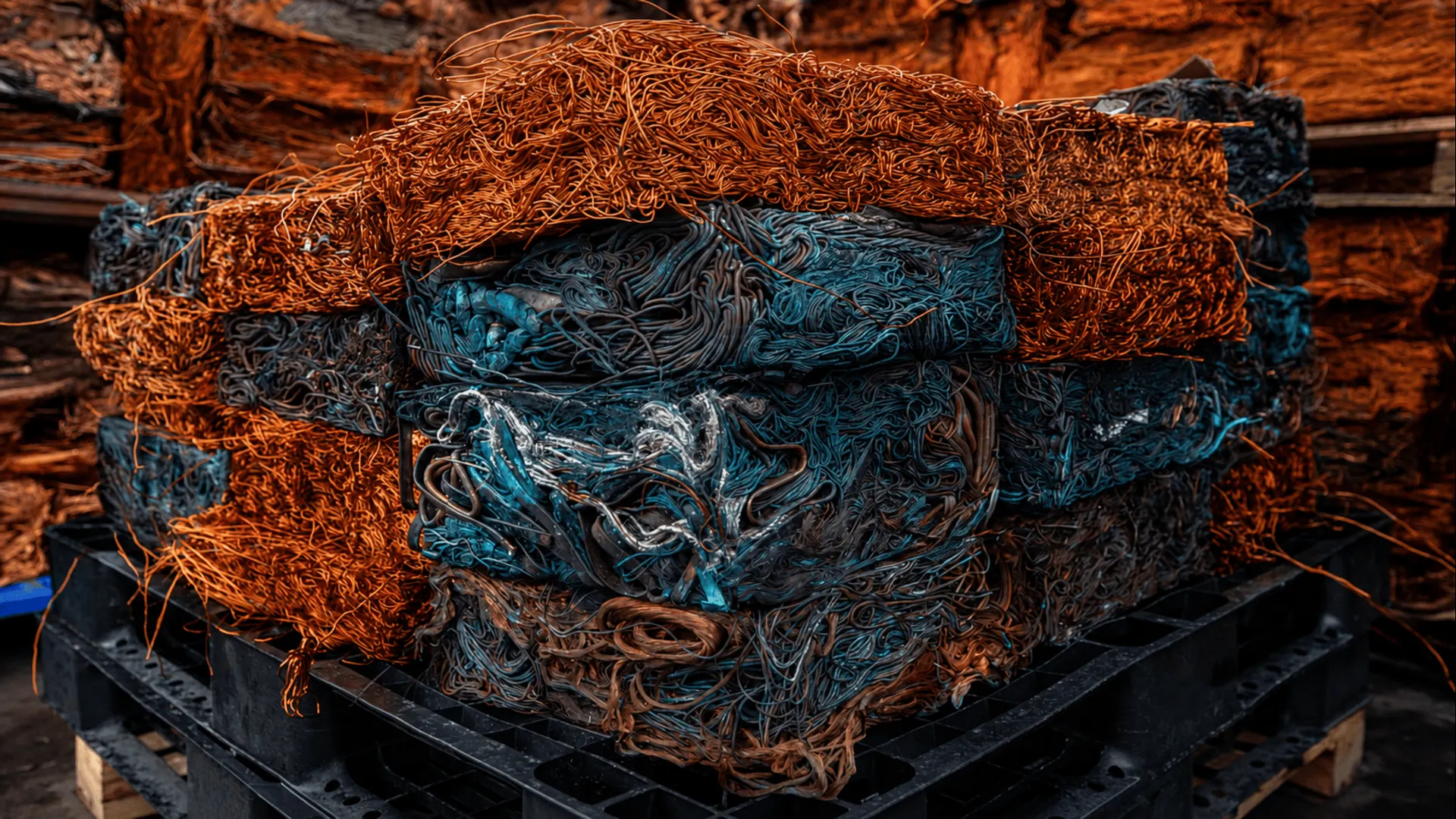
India’s demand for copper is ballooning with electric vehicles, renewable energy, power distribution and construction, while domestic mining meets less than 5% of needs, which is why recycled copper now accounts for 20-25% of supply and creates a clear opening for recyclers who can deliver high-purity granules consistently. According to the reports, the copper scrap market in India is expected to reach a projected revenue of US$ 1,309.6 million by 2033 with compound annual growth rate of 10.1%.
A modern cable recycling plant does not burn insulation or use manual stripping, it uses a fully mechanical line built around a copper cable recycling machine that shreds, granulates and separates metal from plastic in a closed system, and this approach is becoming standard for organized players across the cable recycling industry.
The step-by-step process that every plant follows:
- Collection and sorting. Incoming scrap is classified by conductor type, diameter and insulation, because thick armoured cables need pre-cutting while thin communication wires go straight to shredding, and proper sorting protects blades and improves recovery.
- Primary shredding. Long cables are fed into a primary shredder which reduces volume and opens the structure, and in systems such as Fornnax this stage uses the SR-Series primary shredder to bring material down with up to 150 mm rough shreds.
- Secondary shredding and ferrous removal. The pre-shredded material moves via conveyor to a medium-speed secondary shredder which further sizes material to around 20 mm chips, and this stage also removes most ferrous contamination through magnetic separation.
- Granulation. Chips enter the cable granulator where high-speed knives liberate copper from insulation and produce 1 to 5 mm granules, which is the critical size for clean separation.
- Air and gravity separation. A combination of zig-zag air classifiers, separation tables and electrostatic units separates light plastic from heavy copper, delivering maximum purity without water or chemicals, and the plastic fraction can be further processed into PVC compounds as demonstrated by integrated recyclers.
- Collection and packing. Pure copper granules and separated plastic are conveyed to an auto bag filling system for weighing and storage, ready for sale to wire manufacturers, foundries or compounders.
Core equipment in a cable recycling machine line
A complete wire recycling machine setup in India typically includes a primary shredder, secondary shredder, granulator, magnetic separator, air table separator, dust collection system, conveyors and control panel, and the capacity you choose defines throughput, with small lines starting at 200-300 kg per hour and industrial lines reaching 1,000 kg per hour or more.
Manufacturers like Fornnax design this as an integrated cable recycling plant where each stage is matched, which reduces power spikes and material loss, and their published flow shows the progression from SR-Series primary shredding to R-Series secondary shredding and finally granulation with gravity separation before pneumatic conveying to packing.
Business profitability in the Indian context
The economics are driven by the spread between scrap purchase price and the sale price of clean copper granules, not by subsidies alone, and current market data shows a realistic entry point for MSMEs who secure steady feedstock contracts from scrap dealers, cable manufacturers, demolition projects and government auctions.
- Margins: organized units report net profit margins between 16% and 22% after accounting for electricity, labour and maintenance, because copper retains its quality through infinite recycling cycles.
- Payback: with consistent operations, most plants recover initial investment in two to three years, which is considered strong for manufacturing.
Space needs are modest at 20,000 to 30,000 square feet for a line, and key licences include Udyam Registration, GST, Factory Licence, Pollution Control Board NOC and Fire Safety, with PCB approval often taking the longest, so planning early avoids delays.
Choosing the Right Copper Cable Recycling Machine
For recyclers evaluating a cable recycling machine, the decision should focus on three factors that directly affect profitability: metal recovery rate, energy consumption per ton, and ease of maintenance for blades and screens, because downtime is the hidden cost in cable processing.
This is where system integration matters more than buying standalone units, and Fornnax, as one of India’s leading recycling equipment manufacturers, approaches cable recycling as a complete flow from primary shredding through secondary shredding to granulation, which helps Indian recyclers handle mixed Indian scrap that often includes armoured cables, multi-core wires and varying PVC grades without frequent jams.
If you are planning a plant, start with a material audit, define your target capacity, and request a line layout that matches your scrap mix rather than a generic catalogue spec, because a well-matched copper cable recycling machine line will deliver consistent purity, lower operating cost and faster payback in the Indian market.