
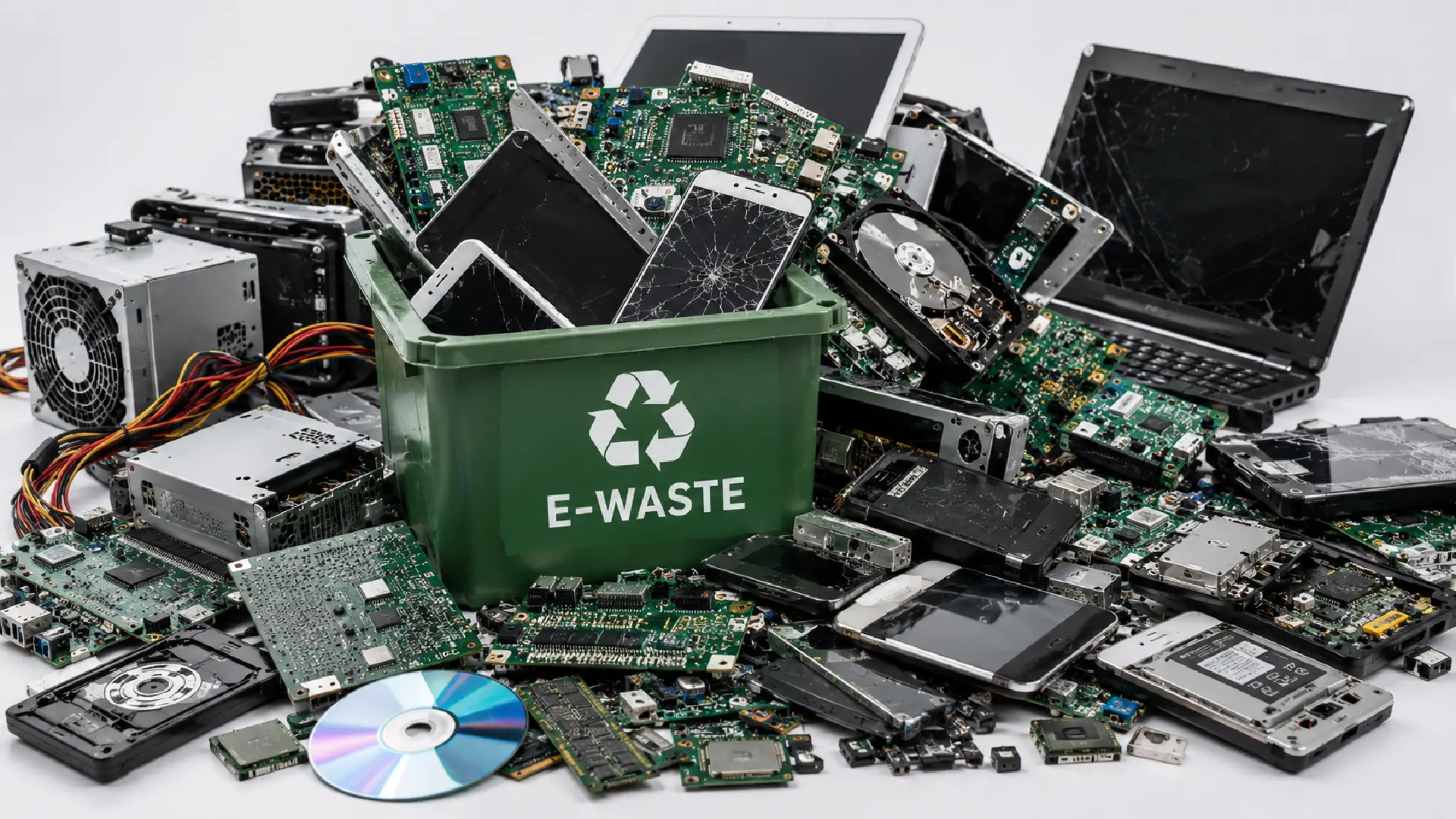
India’s e-waste industry is growing rapidly as more electronic products reach the end of their life. Along with this growth, regulatory compliance has become more important than ever. Whether you are planning a new e-waste recycling plant or expanding an existing facility, understanding India’s E-Waste (Management) Rules is essential for smooth and legal operations.
This guide explains the key compliance requirements every recycler should know in 2026.
Why E-Waste Compliance Matters
The E-Waste (Management) Rules aim to ensure that electronic waste is collected, dismantled, and recycled safely without harming people or the environment. The rules also support a circular economy by recovering valuable materials such as copper, aluminium, steel, plastics, and precious metals from discarded electronic equipment. The framework is administered by the Ministry of Environment, Forest and Climate Change (MoEFCC) and implemented through the Central Pollution Control Board (CPCB).
E-Waste Compliance Checklist for Recyclers
- Register with CPCB
Every authorised recycler must obtain registration through the CPCB E-Waste portal before starting recycling operations. Without valid registration, recycling activities are not permitted under the rules.
- Install an Environmentally Safe Recycling Facility
Your recycling plant should be designed to safely process e-waste while preventing pollution. The facility should include proper material handling systems, dust control measures, waste storage areas, and worker safety provisions.
Modern recycling plants should also maximise material recovery while reducing manual handling and operational risks.
- Track the EPR Recycling Targets
Producers must meet targets under Schedule III, based on EEE sold in an earlier year:
- FY 2023-24 and 2024-25: 60%
- FY 2025-26 and 2026-27: 70%
- FY 2027-28 onwards: 80%
- Accept E-Waste Only Through Approved Channels
Recyclers should receive e-waste from authorised producers, collection centres, bulk consumers, dismantlers, refurbishers, or other approved sources as permitted under the regulatory framework. Proper documentation should be maintained for every incoming load.
- Maintain Complete Records
Every recycler should maintain records of:
- Quantity of e-waste received
- Source of collection
- Quantity processed
- Materials recovered
- Disposal of non-recyclable waste
- Sales of recovered materials
Good documentation helps during inspections and simplifies compliance reporting.
- Submit Returns on Time
Authorised recyclers must submit returns through the CPCB portal within the prescribed timelines and keep all records updated. Timely reporting helps maintain regulatory compliance and improves operational transparency.
- Generate EPR Certificates Correctly
Registered recyclers generate Extended Producer Responsibility (EPR) certificates based on eligible recycling. These certificates help producers meet their EPR obligations under India’s e-waste management framework. Accurate reporting and traceability are essential.
- Prioritise Worker Safety
Employees should receive proper training and use personal protective equipment while handling electronic waste. Safe handling of batteries, printed circuit boards, cables, and hazardous components reduces workplace risks and ensures regulatory compliance.
- Watch for Regulatory Changes
MoEFCC and CPCB update schedules, exemptions, and targets from time to time. Check the official CPCB portal or MoEFCC’s website regularly rather than relying on older summaries.
Why Your Overall E-waste Plant Design Decides Your Compliance Ceiling
Compliance is not only about documentation. It also depends on how efficiently your recycling plant operates.
A well-designed e-waste recycling plant improves:
- Material recovery rates
- Operational safety
- Equipment reliability
- Regulatory compliance
- Overall profitability
Efficient size reduction is one of the most important stages in e-waste recycling. Proper shredding prepares electronic waste for effective downstream separation, helping recover valuable metals while improving the efficiency of sorting technologies.
How Fornnax Supports E-Waste Recycling
Fornnax designs and manufactures high-performance shredding solutions for modern e-waste recycling plants. Built for continuous industrial operations, Fornnax shredders process a wide range of electronic waste, including computers, consumer electronics, cables, electrical assemblies, mixed electronic scrap and more.
Our advanced shredding technology helps recyclers achieve consistent particle size, improve downstream separation efficiency, increase material recovery, and build a reliable recycling process that supports long-term compliance and operational performance.
If you are planning an e-waste recycling plant, choosing the right technology from the beginning can help simplify compliance while improving productivity, recovery efficiency, and future scalability.