
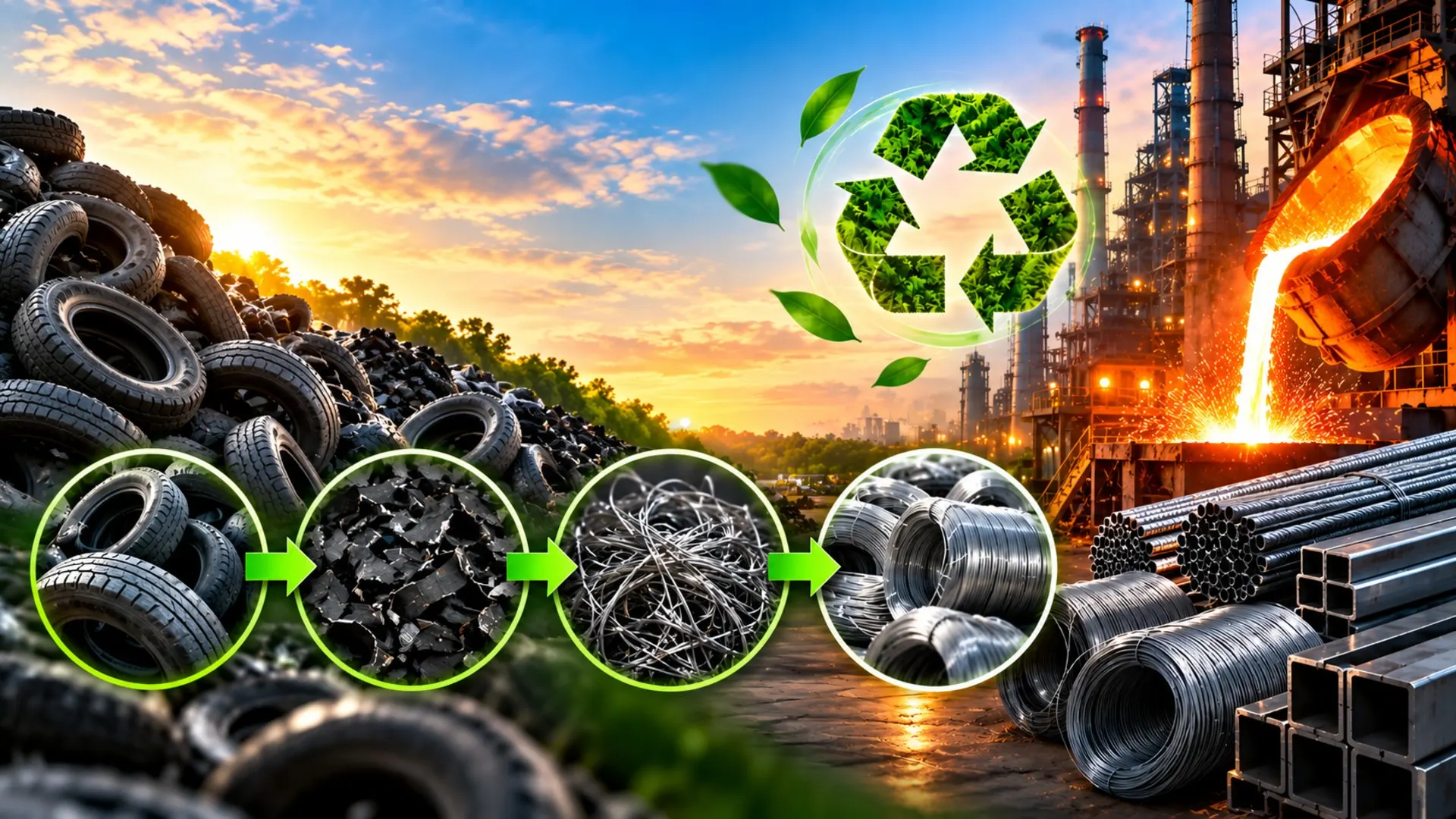
The global steel industry is witnessing a high-value transformation, creating new opportunities to recover valuable materials from end-of-life tyres. Every year, billions of tyres reach the end of their roadworthy lives, with many ending up in landfills and contributing to significant environmental damage.
While tyre recycling has traditionally focused on recovering rubber for applications such as asphalt, playground surfaces, and alternative fuels, the steel reinforcement wire embedded within the tyre carcass offers another valuable recovery opportunity. Once treated as an inconvenient contaminant or low-value scrap byproduct, recovered tyre steel wire is now emerging as a valuable, more sustainable secondary raw material for the modern steelmaking industry and one of the crucial resources with significant industrial potential.
Anatomy of a Tyre: Unlocking the Metal Inside
To understand where this valuable steel comes from, it helps to look at how a modern radial tyre is made. A tyre is much more than a simple block of rubber. It is a carefully built mix of materials designed to handle heavy weight, heat, and tough driving conditions.
- Bead Wire: These are thick, high-carbon steel wires bundled into tight rings. They hold the tyre firmly onto the wheel rim so it stays in place.
- Belts and Body Plies: These are layers of woven steel cords underneath the tread and inside the sidewalls. They give the tyre its shape, protect it from punctures, and keep it strong even at high speeds.
Depending on the vehicle type, including a passenger car, a truck, or a heavy-duty off-the-road mining vehicle, steel makes up roughly 12% to 25% of a tyre’s total weight. For an ordinary passenger car tyre weighing around 8 to 9 kg, this translates to approximately 1.0 to 1.5 kg of steel, whereas a massive mining truck tyre can contain hundreds of kilograms of steel.
The Recycling Process: From Shred to Pure Feedstock
Getting this metal out of the tyre requires smart machines and strong magnets. Separating clean steel from rubber happens in two main steps:
- Shredding: Whole tyres are first fed into large industrial shredding machines, where the primary shredder converts them into tyre shreds and the secondary shredder further processes them into tyre chips or rubber mulch.
The secondary shredding process liberates ferrous metal from the bead and tread areas, which is then separated by an over band magnet placed above the moving belt that instantly pulls the steel wires out of the mixture.
- Cleaning and Refining: At this stage, the feed conveyor system feeds the material into the steel cleaner and fibre separator, where the textile fibre and rubber are separated.
The separated rubber is then routed to the auto bag filling system through a conveyor and pneumatic conveying system, while the steel passes through a drum magnet for secondary magnetic separation, which removes any remaining rubber and ensures high-quality clean steel with purity of up to 99% and further the liberated steel can be compressed in bailing equipment for the easy transportation.
The final result is a clean, tightly packed bundle of strong steel wire that is ready to be melted down and used again.
Why Recycled Tyre Wire Is a Steel Industry “Goldmine”
For steelmakers striving to lower their carbon footprints and secure cost-effective raw materials, recycled tyre wire offers unique metallurgical advantages:
- Exceptional Tensile Strength and Carbon Content
Tyre wire is manufactured from high-carbon steel designed to withstand extreme mechanical loads. Because it is chemically robust, it retains its high tensile strength even after extraction. When introduced into an Electric Arc Furnace (EAF), it melts efficiently and contributes valuable alloying elements to the batch.
- Low Residual Contaminants
Unlike general municipal scrap metal which often contains copper, zinc, tin, and other tramp elements that degrade the quality of new steel, tyre wire is usually clean, dedicated industrial stream. It is relatively free of copper contamination, making it highly desirable for specialty steel production.
- Massive Carbon and Energy Savings
Producing steel from virgin iron ore via blast furnaces is energy-intensive and carbon-heavy. Utilizing scrap steel in an Electric Arc Furnace uses up to 75% less energy and cuts carbon dioxide emissions by roughly 58% compared to primary production. Recycled tyre wire directly feeds this circular economy, helping steel mills meet strict ESG (Environmental, Social, and Governance) targets.
Economic and Environmental Impact
The financial and ecological implications of this sector are profound. Globally, over one billion tyres are scrapped annually. By systematically harvesting the steel fraction:
- Landfill Diversion: Millions of tons of composite waste are diverted from landfills, reducing long-term environmental hazards like tyre-fire risks and toxic leaching.
- New Revenue Streams: Tyre recyclers are transforming a costly waste-disposal problem into a lucrative co-product. The sale of recovered steel wire significantly offsets overall recycling plant operating costs.
- Supply Chain Resilience: Steel mills gain access to a localized, reliable, and price-stable source of raw metal, insulating them from the volatility of global iron ore and traditional scrap markets.
The Road Ahead
As environmental regulations tighten and the global push toward net-zero manufacturing accelerates, the symbiosis between tyre recyclers and steel producers will only deepen. Capitalizing on reclaimed resources like steel from scrap tyres represents a pivotal step toward a truly circular metal economy.
If you want to recover cleaner steel from end-of-life tyres and maximise the value of every tonne processed, Fornnax Steel Cleaning Plant can help you turn recovered steel into a valuable revenue stream.