
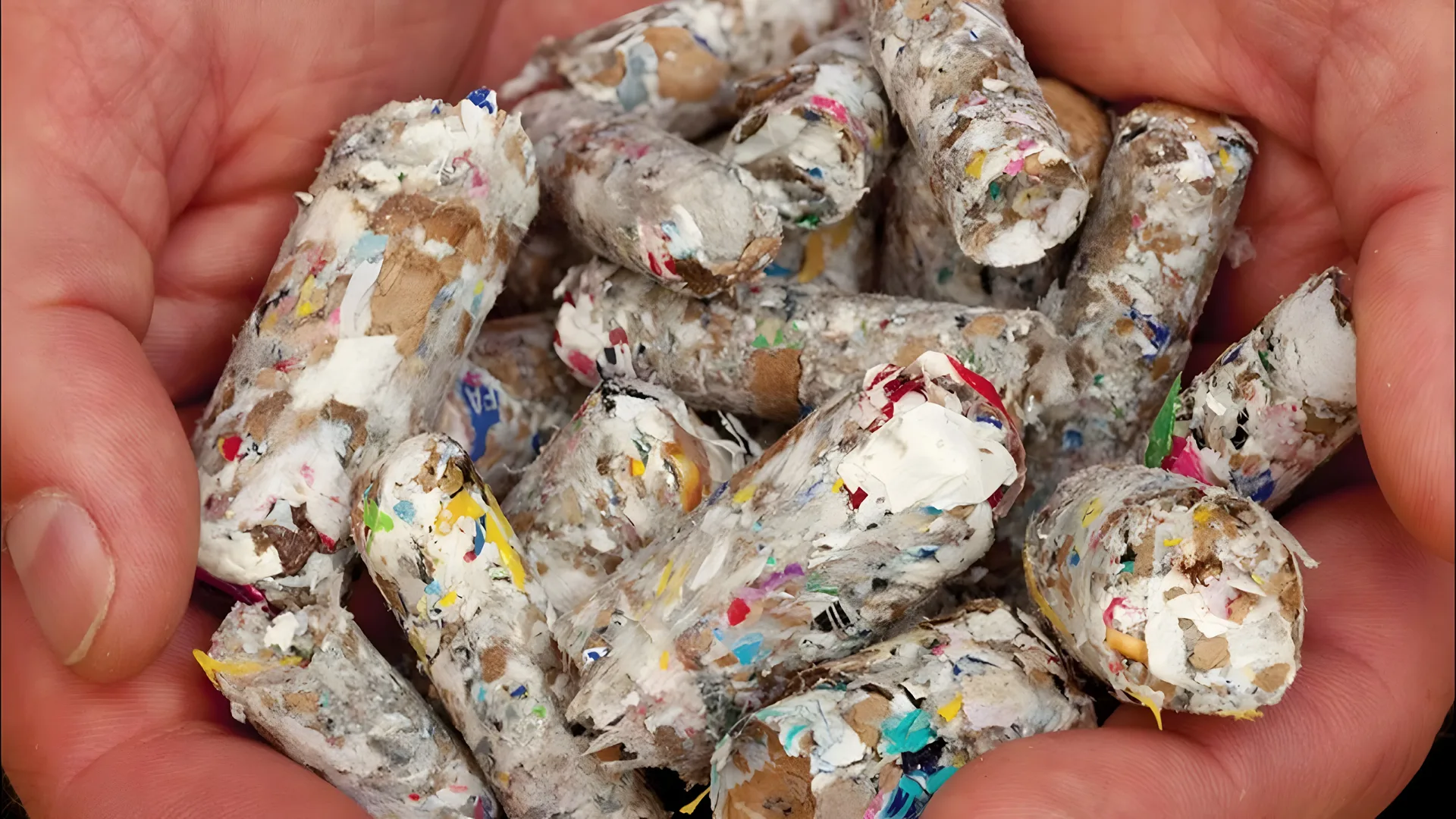
As Indian cement plants accelerate their shift toward alternative fuels and raw materials (AFR), Refuse-Derived Fuel (RDF) has emerged as a strategic substitute for fossil fuels. However, the assumption that RDF is a uniform commodity is misleading. In reality, RDF is a highly variable material, and its compatibility with kiln systems depends on precise tailoring especially through advanced shredding technologies.
Understanding RDF Variability
RDF is a highly heterogeneous fuel derived from municipal, industrial, and commercial solid waste. This inherent variability creates significant challenges for cement kiln co-processing.
Key Variances and Their Impact
Calorific Value: Fluctuates widely, typically from 2,500 to 5,000 kcal/kg, based on the proportions of plastics, textiles, and organics. This inconsistency directly impacts the thermal input to the kiln, making it difficult to maintain a stable operating temperature.
Moisture Content: Often exceeds 30% in unprocessed waste, which drastically reduces combustion efficiency and requires additional energy to evaporate the water, lowering the overall net calorific value of the fuel.
Contaminants: The presence of chlorine, alkalis, and heavy metals from the source waste streams poses serious risks. These contaminants can lead to refractory damage, kiln blockages, and an adverse effect on clinker quality, necessitating a robust pre-processing approach beyond simple mixing.
Such variability cannot be resolved with simple drying or mixing alone. A robust pre-processing strategy is essential, with precision shredding serving as the foundational step to transform inconsistent waste into a uniform, high-quality fuel.
Shredding: The Cornerstone of RDF Customization
Shredding is more than a simple size reduction process; it’s a critical pre-processing step that enables fuel homogenization and quality control. The use of high-performance shredders is essential for producing a consistent RDF product that meets the stringent requirements of modern cement kilns. Shredding directly influences RDF suitability by:
- Particle Size Optimization
The ideal particle size for RDF is a function of the kiln’s specific fuel injection point and residence time. Shredders are engineered to produce a consistent particle size distribution, typically ranging from 50 to 80 mm. This controlled sizing ensures the RDF burns completely within the kiln, preventing unburnt carbon carryover and maintaining stable flame profiles.
- Moisture Reduction Synergy
Shredding significantly increases the RDF’s surface area-to-volume ratio. This enhanced surface area is crucial for more efficient drying, whether the drying occurs naturally or is integrated with mechanical systems. By reducing moisture content to levels below 15%, shredding improves the fuel’s calorific value and reduces the thermal energy lost to vaporizing water during combustion.
- Segregation Enablement
The mechanical action of shredding breaks apart the waste matrix, liberating and exposing embedded non-combustible materials like metals and glass. This enables more effective downstream separation through technologies such as eddy current separators or air classifiers. Removing these inert materials minimizes the ash content of the RDF and, more importantly, prevents refractory damage and the formation of low-melting-point slag.
- Feedstock Consistency
Producing a consistent, uniform RDF stream is vital for maintaining steady kiln operations. A homogenous RDF feedstock ensures a stable calorific value and flow rate, which is necessary for precise control of the kiln’s thermal profile. This consistency reduces fluctuations in the main burner and calciner, leading to better clinker quality and lower NOx emissions.
RDF Particle Size and Suitable Kiln Injection Points
In cement co-processing, the choice of RDF particle size is not arbitrary, it must be matched to the kiln’s fuel injection point to ensure complete combustion and avoid operational issues. The residence time, temperature profile, and oxygen availability vary significantly between the main burner, calciner, tertiary air duct, and preheater/riser duct. As a result, each point demands RDF with specific size ranges and physical characteristics. Global best-practice guidelines, including those referenced in the CPCB’s Co-processing in Cement Industry framework and European BREF documents, indicate that finer RDF is required at the main burner for rapid ignition, while coarser fractions can be used in the calciner or tertiary air duct where combustion time is longer.
The following table summarizes the typical size requirements and operational considerations for each feeding point:
| Kiln Injection Point | Typical RDF Size | Reason for Size Requirement | Operational Notes | |
| <30–50 mm | Quick ignition, complete burn within short flame length | Requires high CV, low moisture (<15%), minimal chlorine | |
| <50–80 mm | Longer residence time allows slightly coarser RDF | Must be consistent in size to maintain flame stability | |
| 50–100 mm | Introduced mid-zone for steady burn | Avoid high-chlorine fractions to prevent build-up | |
| <80 mm (light fraction) | Lower temperature zone, needs high surface area | Risk of blockages if too fibrous or wet
|
Relevance to Indian Cement Industry
India’s cement sector is under increasing pressure to raise its Thermal Substitution Rate (TSR) in line with the Ministry of Environment, Forest and Climate Change (MoEFCC) and Central Pollution Control Board (CPCB) co-processing guidelines. However, inconsistent RDF quality remains a crucial bottleneck which can be addressed with the right pre-processing strategies, including precision shredding, moisture control, and contaminant removal tailored to the specific kiln system.
The notion of “one-size-fits-all” in RDF processing is not only outdated, it’s operationally risky. Cement kilns are complex thermal systems that demand fuel consistency, chemical compatibility, and physical uniformity. Shredding technology is the linchpin in achieving these parameters.