
As we steer toward a more sustainable future, finding smart ways to reuse industrial waste is no longer just a good idea; it has become a necessity. Among the toughest challenges is tackling the mountain of end-of-life tires piling up each year, with global production hitting a staggering 2.5 billion tires annually.
The United States, in particular, faces a substantial burden, contributing over 280 million scrap tires to this global total each year. The environmental implications of this mounting tire waste are profound, posing significant hazards to ecosystems and human health. However, this challenge also presents a powerful opportunity for tire recycling business in the United States to lead the way in transforming waste into valuable resources like Tire Derived Aggregate (TDA).
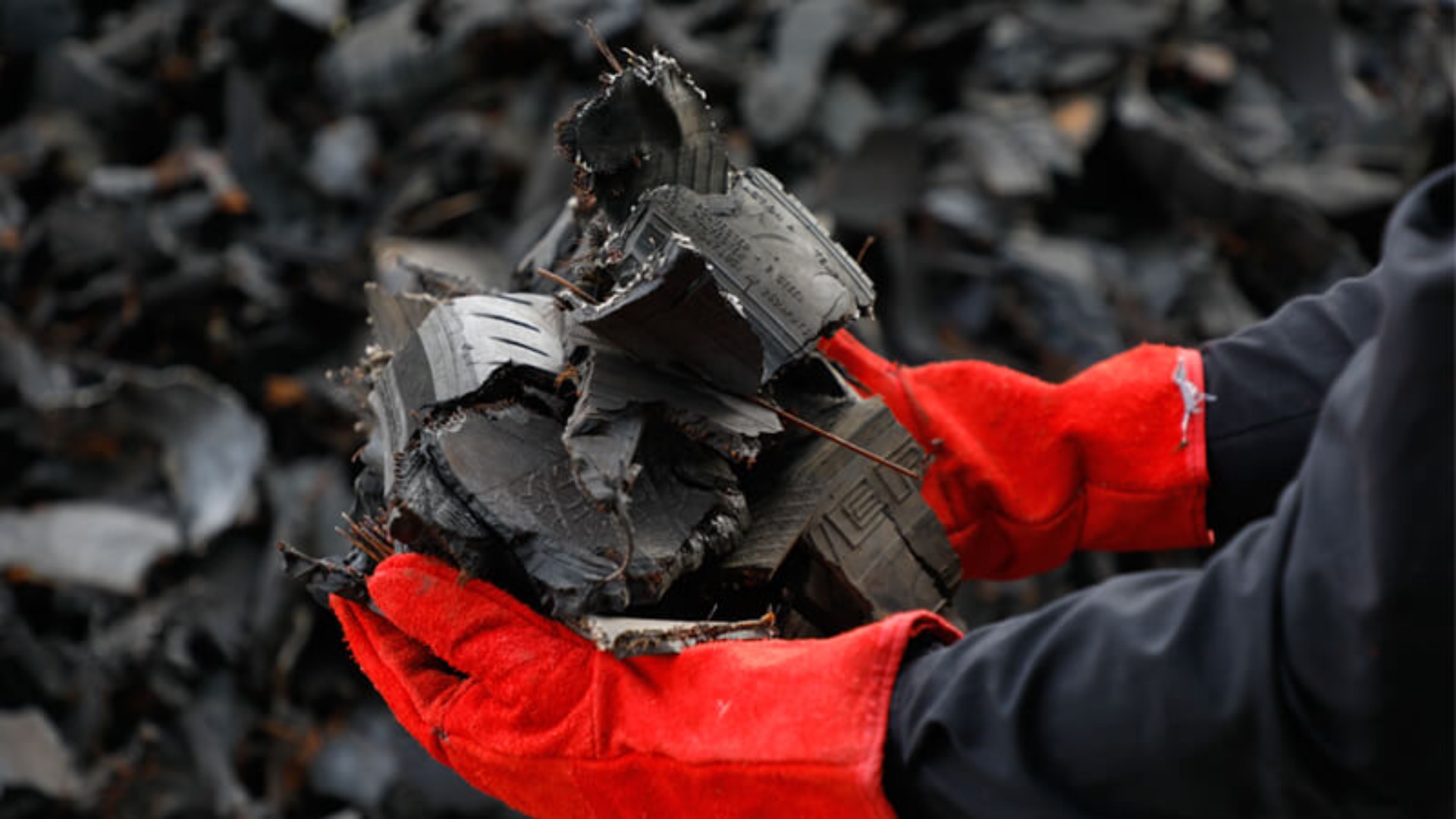
Tire Derived Aggregate (TDA), made from shredded scrap tires, is rapidly gaining ground in the U.S. as a game-changing solution for civil engineering and infrastructure. With its unique blend of performance and sustainability, TDA helps tackle multiple environmental priorities like reducing landfill waste, preserving natural resources, and driving and most importantly creating new revenue streams and business opportunities in the growing tire recycling market in the U.S.
But what makes TDA so versatile in nature?
It’s the combination of its unique properties, carefully crafted to meet the specific needs of civil engineering and infrastructure projects. According to ASTM D6270-08, TDA consists of scrap tires cut into pieces with a basic geometrical shape, ranging in size from 2 to 12 inches.
The two primary types of TDA, Type A and Type B, offer distinct advantages, with Type A featuring a maximum size of 3 inches and Type B reaching up to 12 inches. However, TDA specifications can vary depending on the project’s technical, environmental, and economic requirements, allowing contractors to tailor the material to their specific needs. The properties that make TDA an attractive solution include its lightweight nature, weighing only 1/3 as much as soil, and its low earth pressure, which is half that of soil. Additionally, TDA provides excellent thermal insulation, outperforming gravel by a factor of 8, and exceptional drainage capabilities, surpassing traditional materials by a factor of 10. Its compressible nature also makes it ideal for vibration mitigation, and its low cost adds to its appeal. With these benefits, it’s no wonder TDA is gaining traction in the civil engineering and infrastructure communities in the United States.
How TDA is processed?
The processing of TDA involves a systematic approach, starting with the selection of tire feedstock, which can include passenger and truck tires or a mixture of different tire sizes. The tires can be sourced from various streams, including current flow tires, stockpiled tires, or site cleanup tires. To prepare TDA, the tires are fed into a primary shredder, such as the Fornnax SR-Series, through an infeed conveyor system. This high-torque, low-speed equipment reduces whole tires to variable-size strips. The single-pass shred produced by the Fornnax SR-Series Primary Shredder can be up to size 200 (12 inches), which corresponds to Type B TDA. For Type A TDA, a disc screen is deployed with the primary shredder, which can produce sizes up to 150 mm.
What are the Primary Categories of Civil Engineering Applications for TDA?
- Road construction and embankments benefit significantly from TDA’s use as lightweight fill, thermal insulation, and drainage material, enhancing stability and reducing settlement.
- In landslide stabilization and retaining wall backfill, TDA’s lightweight and compressible nature proves invaluable, reducing lateral forces and promoting stability to ensure safer infrastructure.
- TDA’s high porosity makes it an ideal material for septic system construction, increasing drain field storage capacity by 30% and improving system efficiency.
- By incorporating TDA into light-rail construction, engineers can effectively reduce ground-borne vibrations and noise transmission, creating a more comfortable ride for commuters.
- Landfill construction projects utilize TDA in various ways, including as a drainage layer, leachate recirculation trench backfill, gas collection layer, and cover system material, all of which enhance environmental sustainability.
- As a lightweight backfill material along foundation walls, TDA provides numerous benefits, including excellent drainage, thermal insulation, and reduced lateral earth pressure, ultimately resulting in more durable structures.
As global tire production approaches a staggering 2.5 billion units annually, the rising volume of end-of-life tires (ELTs) has become a formidable environmental challenge which in turn is also becoming a lucrative opportunity to tire recycling businesses across globe for innovative entrepreneurs and companies looking to capitalize on the growing demand for sustainable waste management solutions, such as Tire Derived Aggregate (TDA) and other recycled tire products.